When ED diagnosis arrives, arousal gets complicated
Your partner gets the news from a doctor. Suddenly the conversation shifts from "we haven't been intimate in a while" to "there might be a medical reason." Relief, maybe. But also confusion. Because now you're both trying to figure out what this means for your pleasure, his sense of masculinity, and whether sex will ever feel spontaneous again.
Here's what I've seen in my practice: couples who treat ED as a shared problem (not his problem) recover faster. And part of that shift is learning to pleasure each other differently.
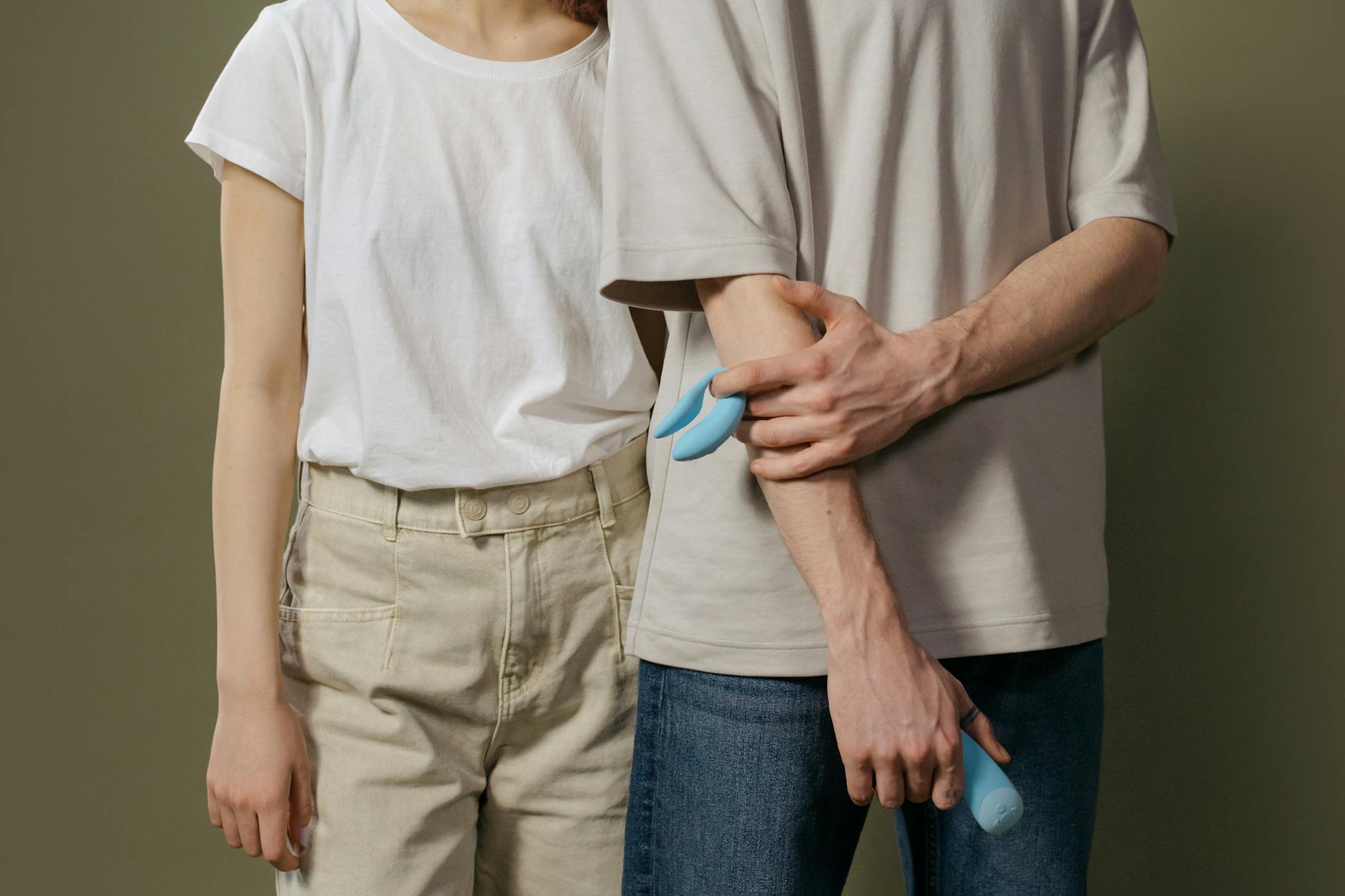
Lemon clitoral vibrators fit naturally into that conversation. They're not a workaround. They're a redirect.
The emotional weight ED carries into the bedroom
Erectile dysfunction isn't purely physical, even when it has a medical cause. The diagnosis lands with psychological weight. He might feel shame, reduced masculinity, or anxiety about performance. You might feel rejected, confused about whether you're still attractive, or anxious that fixing this is somehow your job.
Both of those feelings are normal and both make arousal nearly impossible.
The nervous system can't relax when it's scanning for failure. And when someone is scanning for failure, authentic desire flatlines. This is where most couples get stuck. The ED is real. The anxiety is real. And the anxiety makes the ED worse.
Breaking that cycle requires taking penetration off the table temporarily. Not forever. Temporarily.
How redirecting pleasure changes the dynamic
When a lemon vibrator becomes part of foreplay, a few things happen at once.
First, pleasure is no longer dependent on his erection. Your orgasm doesn't hinge on his performance. That sounds simple, but it's revolutionary for both of you. He gets to watch you feel good without the pressure of causing it. You get to experience pure pleasure without monitoring his body for signs of failure.
Second, the focus shifts away from him entirely. In ED recovery, couples often unconsciously make everything about maintaining or achieving an erection. A clitoral vibrator breaks that pattern by saying: your pleasure matters independently. It exists on its own terms.
Third, sensation itself becomes more complex and interesting. A partner's hand, a tongue, fingers, and the steady rhythmic pulse of a lemon vibrator all create different neurological responses. Mixing these sensations keeps arousal fresh and prevents the routine numbness that creeps in when couples stay in the same pattern.
Why lemon clitoral vibrators specifically
Lemon sexual toys work differently than traditional vibrators because they use gentle suction rather than intense vibration. That matters here because:
Intense vibration can feel clinical or demanding when you're already emotionally fragile. A suction toy feels more like skin contact. It's gentler to your nervous system when you're rebuilding trust in pleasure.
Clitoral vibrators also allow your partner to stay engaged and connected. He can hold it, experiment with pressure and patterns, watch you respond. He's not sitting on the sidelines. He's part of creating your pleasure, which helps rebuild his sense of agency and desirability.
The steady, even pulse of a lemon vibrator is also predictable in a good way. When anxiety is high, unpredictability triggers more fear. A reliable, gentle rhythm helps your nervous system relax into sensation.
The conversation that needs to happen first
Using a toy after an ED diagnosis isn't something to surprise your partner with. It needs to be framed as a choice, not a consequence.
Try: "I've been thinking about how we can both feel good right now, without pressure on either of us. Would you be interested in exploring what works for my body while we figure this out together?"
Not: "We should use a toy because you can't get hard."
The difference is massive. One frames this as expansion. The other frames it as damage control.
If he's resistant, that's information too. Sometimes resistance points to shame that needs addressing separately, possibly with a therapist. Sometimes it's just unfamiliarity. Either way, it deserves a conversation, not a workaround.
Rebuilding arousal without performance pressure
Once you've introduced a clitoral vibrator into your intimacy, the way arousal rebuilds is different from before. Here's what helps:
Start with no goal. Not even orgasm. Just sensation. Five or ten minutes of exploration without any expectation creates the conditions where real arousal can actually appear.
Take turns focusing. One session might be entirely about your pleasure. The next might be about his touch, his experience of being close to you, his learning what you like. Alternating focus prevents the unconscious pressure-cooker dynamic where everything becomes about solving the ED.
Use lemon vibrators as connection, not replacement. The goal isn't for the toy to become his substitute. It's for the toy to help you both remember what pleasure feels like without anxiety attached.
Allow spontaneity to return slowly. In the early weeks, planning intimacy helps because spontaneous moments can trigger performance anxiety. Gradually, as his nervous system learns that sex isn't a test, spontaneity can resurface.
When to bring in external support
Some ED is purely physiological. Some is anxiety-driven. Most is both.
If your partner hasn't already seen a doctor, that's step one. There are genuinely effective treatments: PDE5 inhibitors, testosterone therapy if that's the underlying cause, or medical devices. A good GP or urologist can help identify the root cause.
If the emotional piece is heavy, couples therapy helps. Not because there's anything wrong with your relationship, but because ED triggers specific dynamics that couples counseling is designed to untangle. A therapist familiar with sexual health can help you rebuild arousal as a team, not opponents.
Sex therapy specifically (different from relationship therapy) is also worth considering if you're stuck. A sex therapist can offer concrete exercises designed to rebuild connection and arousal in the context of ED.
Hello Nancy can't replace a doctor or therapist. But clitoral vibrators absolutely can be part of your recovery toolkit. They're practical, accessible, and they shift the entire conversation about what sex can be when traditional penetration is off the table.
FAQ: Rebuilding arousal after your partner's ED diagnosis
Will using a lemon vibrator make his ED worse?
No. If anything, removing performance pressure typically improves erectile function over time. The anxiety loop is often the real problem. A vibrator that takes the focus off his erection actually helps break that cycle. The key is framing it as "we're exploring pleasure together," not "this is because you can't perform."
Can we use a clitoral vibrator with him inside me if he has ED?
Yes, but it might not be the immediate move. Early on, focusing on your pleasure separately (while he watches, touches, participates) often rebuilds confidence better than diving into partnered penetration. Once his anxiety settles, adding a vibrator during penetration can intensify sensation for you both. Talk about it first.
How do I bring up using a lemon vibrator without hurting his feelings?
Frame it around your pleasure, not his limitations. "I've been curious about exploring what feels good for me. Would you want to try that together?" is very different from "We need this because of your ED." One invites participation. The other sounds like fixing a problem.
Is it normal to lose attraction after an ED diagnosis?
Completely normal. ED often brings shame and anxiety into the bedroom, which are arousal killers for everyone. Your attraction hasn't actually changed. But your nervous system is probably on alert. Rebuilding arousal (with or without toys) helps restore the safety that allows attraction to resurface.
How long does it take to rebuild arousal after ED?
It varies wildly. If it's purely physical and medical treatment works, sometimes weeks. If it's anxiety-driven, it might take months of rebuilding nervous system safety. The couple that treats it as a shared challenge (not his fault, not your job) recovers faster than couples who blame or hide. And tools like clitoral vibrators that allow pleasure to exist independently of his function help speed that timeline.
Should we tell a therapist we're using vibrators?
Yes. A sex therapist specifically should know. They're not there to judge. They're there to help you rebuild arousal safely. If you see a couples therapist, mentioning it helps them understand the practical steps you're taking to reconnect. Transparency helps them help you better.
Rebuilding intimacy is possible
ED feels like a fracture in the bedroom. But it's also an opportunity. Because when you rebuild after diagnosis, you're not just returning to what was. You're learning what your bodies actually want together.
Lemon clitoral vibrators aren't a band-aid. They're a tool for rediscovering pleasure without the weight of performance. They shift the conversation from "how do we fix him" to "how do we both feel good." That's not a small thing.
If you're navigating this with your partner, you're doing harder work than most couples. Give yourself credit for that. And if you need support beyond toys and conversation, reach out to our team. We're here to help.