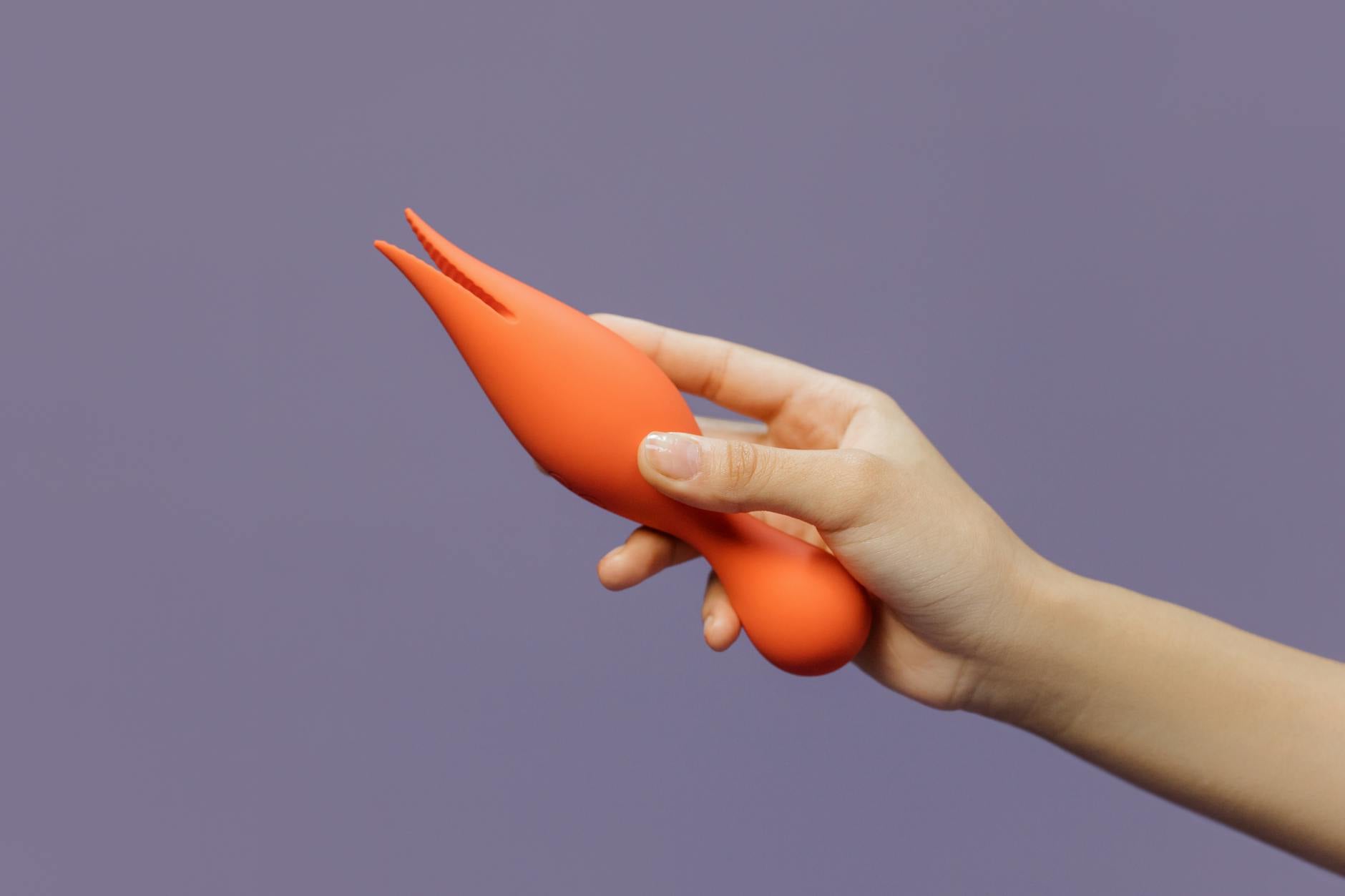
Let's talk about the resistance first
Honestly, the number one reason a partner resists toys isn't about the toy itself. It's about what they think the toy means. Your partner who says "I don't get why you need that" is usually hearing "I need something you can't give me." And that feels like failure to them, even if that's nowhere near what you meant.
Understanding the real fear underneath the objection is everything. Without that, you'll keep bouncing off defensiveness no matter how cute the lemon vibrator is.
What your partner is actually worried about
Three fears come up again and again in my practice, and only one of them is about the toy.
Fear one: inadequacy. They're worried toys mean you're not satisfied with them. This is ego, sure, but it's also genuine vulnerability. They think introducing a toy is code for "you're not enough." Your job is to separate those conversations. A toy isn't a replacement for your partner. It's an addition, like adding a new spice to a meal you already love.
Fear two: embarrassment. Lots of people grew up in families where sex toys were taboo, dirty, or laughable. They might feel ashamed just having the conversation. If this is your partner, moving slowly and treating the topic as matter-of-fact rather than a big emotional deal can help. You're not proposing something radical. You're suggesting a tool.
Fear three: pressure. Some partners worry that if they say yes to trying lemon vibrators, they're agreeing to something kinky or performative. They're worried they'll feel pressured during sex to "use it right" or that it'll change the dynamic they actually like. This one is real. You need to be explicit: "No pressure. We try it once, and if it doesn't work, we drop it."
The conversation framework that actually works
Forgot the sexy, suggestive approach. That usually backfires with a resistant partner. Instead, try this frame.
Pick a neutral moment. Not during sex, not right before. A conversation over coffee or while you're both doing something else works best. Resistance partners often feel ambushed if you bring it up in a sexual context.
Name the pattern first. Say something like, "I've noticed I take longer to orgasm these days, and I think it's just how my body works. I'm not unhappy with our sex, but I want to explore something that might help me feel more." You're not blaming them. You're naming your own observation.
Then introduce the tool as a solution, not a verdict. "I looked into it, and a lot of people talk about trying a lemon vibrator for clitoral stimulation. I'm curious if it might help me relax into things faster. Would you be open to trying it together, no pressure?"
Notice what just happened. You made it about your pleasure, not their performance. You gave them an easy out ("no pressure"). You invited partnership ("together"), not replacement. And you named the tool by name, which takes away mystique and makes it concrete.
Why the approach matters more than the toy
Honestly, it doesn't matter if you're using a lemon vibrator or something else. What matters is that your partner goes from "this is weird" to "I'm curious about this."
The shift from resistance to curiosity happens when your partner feels safe, included, and not blamed. It does not happen when you surprise them with a toy in the bedroom or when you make them feel like their previous effort wasn't enough.
Once they've said yes in principle, take the next step slowly. Don't have sex that night. Show them the toy in a non-sexual context. Let them hold it, look at it, ask questions. Demystifying it is half the work. Lemon vibrators are sleek, well-designed, not grotesque or intimidating. Most partners are surprised by how normal it looks.
Then, when you do use it together, start with them watching you use it solo. No penetration, no performance pressure. Just you exploring your own pleasure while they're present. This does three things at once. It proves you're not asking them to do anything you won't do. It lets them see that you're still you, still enjoying yourself, still attracted to them. And it gives them space to feel curious instead of inadequate.
How to actually use it together without awkwardness
Once your partner is on board, the logistics matter.
Start with foreplay, not the main event. Introduce the lemon vibrator early in the session when you're both already aroused but you're not yet in deep penetration. This positions it as a warm-up tool, not a replacement. That reframe helps a resistant partner relax.
Let your partner stay in control. Early on, have them hold the vibrator if they want to, or at least have them choose when to use it. Giving them agency over the tool combats the inadequacy fear. They get to contribute to your pleasure in a new way, which often flips the script from "Am I enough?" to "I can do something new for her."
Communicate in the moment. "That feels good. Keep going there." "Try a lower intensity." "Can you move it slightly left?" Your partner is not a mind reader, and feedback turns collaboration into intimacy. Plus, it proves you're enjoying it, which is the real antidote to their resistance.
Use it together, not instead. If your partner is still skeptical, use the lemon vibrator while you're also having penetrative sex or while they're touching you in other ways. It's an addition, not a replacement. You're literally proving that through your actions.
The conversation after the first time
Don't skip this. Ask them how they felt. Not how you felt. Them.
"I loved that. How was it for you?" gives them space to be honest. They might say "I'm still getting used to it" or "That was hotter than I expected" or "I'm not sure yet." All of those are data, not failure.
If they're lukewarm, don't oversell it. "Cool. We can try again next time if you want, or forget about it. No big deal." That's the truth, and it releases the pressure. Weirdly, once the pressure is off, a lot of resistant partners become more open.
If they're into it, great. You just opened a new door together.
When resistance is actually deeper
Sometimes resistance isn't about embarrassment or insecurity. Sometimes it's about a partner who feels that their role is to be the sole source of your pleasure, and toys fundamentally threaten that worldview. This is less about toys and more about control or outdated ideas about intimacy.
If that's your situation, the toy conversation is really a deeper relationship conversation. You might benefit from talking to a couples therapist about how you both think about pleasure, agency, and partnership. A Lemon vibrator can't fix that. Only honest conversation can.
But for most partners who are just skeptical or nervous, the approach I've outlined here works. You're not selling them on the toy. You're inviting them into a new kind of intimacy where both of you get to explore pleasure together. That's worth the conversation.
Frequently asked questions
What if my partner says no and won't budge?
Respect that. If it's a dealbreaker for you, that's real too, and you might need to decide what that means for the relationship. But most partners who say no initially just need time and safety. Bring it up again in six months. Their "no" today might be "maybe" later. Don't weaponize their initial resistance or use it against them in other fights. That poisons the whole conversation.
Will a lemon vibrator make my partner feel replaced?
Not if you frame it right and use it the way I described. The magic is doing it together, not secretly. When your partner watches you use it and sees your genuine pleasure, and then participates in that pleasure, replacement anxiety usually dissolves. You're not choosing the toy over them. You're choosing more pleasure with them.
What if my partner wants to use it but then feels awkward in the moment?
Awkwardness is normal. You're both learning something new. Laugh about it. Make it light. "This is weird, right? Let's figure it out together." Pressure and seriousness kill arousal. Playfulness and patience build it. If it doesn't work that night, you have plenty of other nights.
Should I surprise my partner with a lemon vibrator as a gift?
No. Not if they're resistant. Surprises feel like ambushes when someone is already hesitant. Get buy-in first. Once you have it, buying a toy together, even online, can be fun. They get to choose it too, which builds ownership and curiosity. That shared decision matters more than the surprise.
How do I know if my partner is genuinely open or just saying yes to make me happy?
Ask them. "Are you actually into this, or are you doing this for me?" Real partners will usually tell you the truth if you give them explicit permission to. And if they are doing it just for you, that's actually valuable information. It means you need to have a bigger conversation about pleasure, boundaries, and what you both actually want from your sex life.
What if we try it and it doesn't work for either of us?
Then you tried something. That's actually a bonding experience. You explored together, you were vulnerable together, and it didn't land. That's fine. Put the lemon vibrator away and try something else, or stick with what works. The goal was never the toy. The goal was connection and pleasure. If the tool doesn't serve that, it doesn't matter.
The bigger picture
Introducing a toy to a resistant partner isn't really about the toy. It's about building enough trust and safety that you can ask for what you want without your partner hearing it as a criticism. It's about framing pleasure as something you explore together, not something one of you is failing to provide.
Once your partner sees that lemon vibrators aren't a threat but a way to deepen your intimacy, resistance usually softens. You're not asking them to change. You're inviting them to expand. That invitation, delivered with patience and genuine care for their feelings, is what actually works. The toy is just the vehicle.