
Let's be honest about the conversation
Introducing a lemon vibrator into partner sex feels like it shouldn't be awkward. And yet. Most couples I talk to describe the approach like they're suggesting something faintly transgressive, when really they're just talking about a tool that adds pleasure to something you both want.
Here's what I've learned after years of working with couples: the awkwardness isn't about the toy. It's about the gap between what you want to say and what you're actually saying. So let's close that gap.
The conversation starter that actually works
Don't ask permission. Don't apologize. Don't frame it as "fixing" anything.
Instead, lead with curiosity and desire. Something like: "I've been thinking about trying a lemon vibrator together. I'm curious what you think." Or: "I read that a lot of people use lemon clitoral vibrators during partner sex. Would you want to experiment with that?"
The shape of that sentence matters. You're not saying "I need something you're not giving me." You're saying "I want to explore this with you." The difference is everything.
If your partner hesitates, that's information, not rejection. Ask why. Is it about insecurity ("Does this mean I'm not enough?")? Logistics ("Won't it be distracting?")? Genuine disinterest? Those are three different conversations, and they need three different responses.
What insecurity actually looks like and how to handle it
Most partners who worry about vibrators are worried about one thing: that you'll prefer the toy to them. This is a real feeling, even when it's not logically grounded.
The antidote isn't to convince them they're wrong. It's to be specific about what you want. "I like the intensity of a lemon sucker during sex with you because it helps me climax, and then I get to feel you inside me." Or: "The vibration gives me something different, but you give me closeness." Specificity kills the abstract dread.
Many partners actually find that watching someone they love experience intense pleasure is more arousing, not less. But that usually only becomes clear after the first time, when fantasy lands against reality and reality wins.
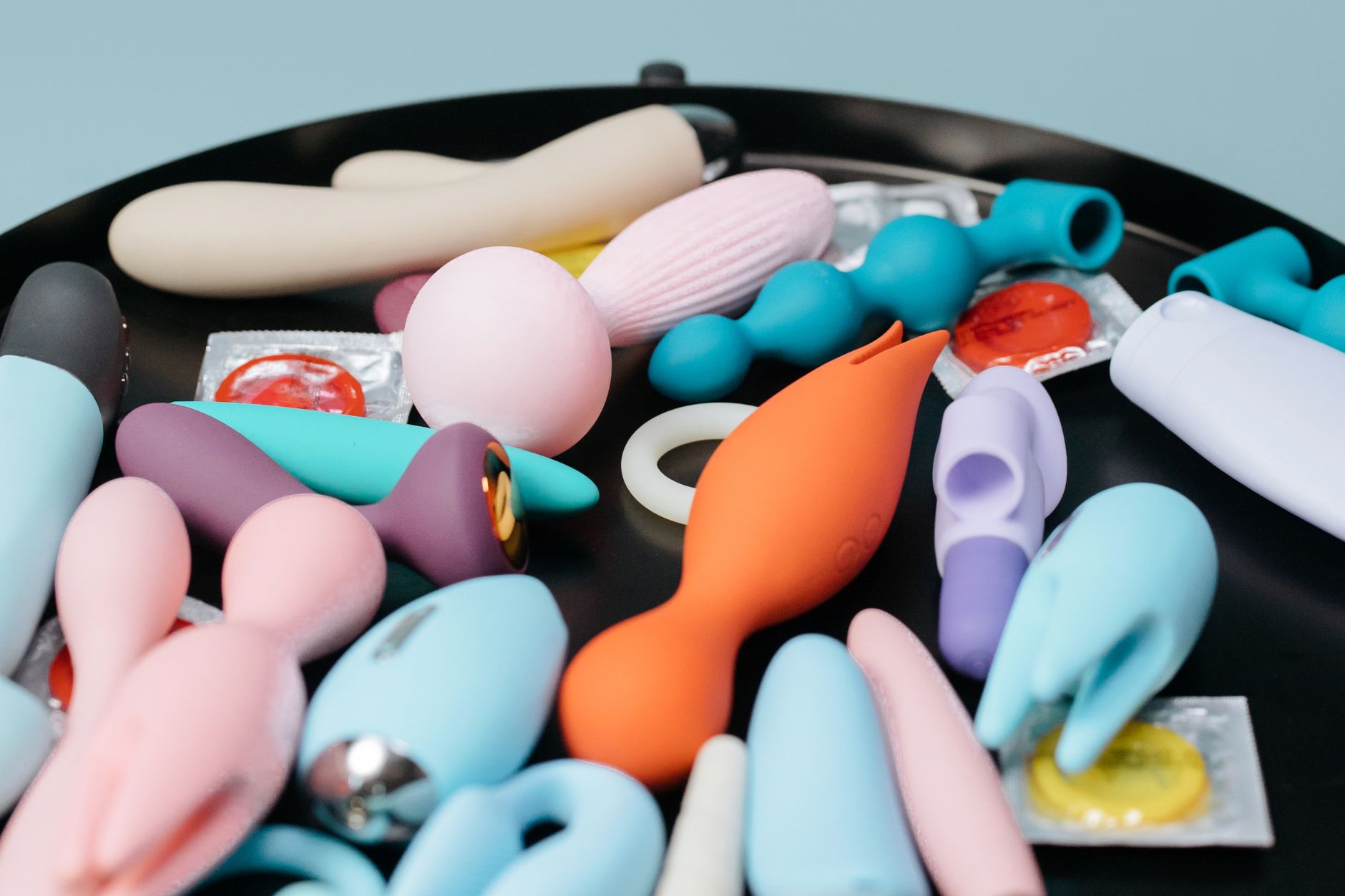
Photo by cottonbro studio on Pexels
Positioning and logistics that feel natural
This is where most couples freeze up. There's no single way to do this, but there are some reliable shapes that work for common positions.
During penetration (from behind). Your partner enters you from behind. You or they hold the lemon vibrator against your clitoris. This works because there's zero interference with penetration, and the vibrator isn't in the way.
During penetration (facing). Your partner is on top, you're on your back. You hold the vibrator between you and your own body, or your partner holds it while they move. This one requires a bit more coordination, but the closeness is worth it.
Side-by-side. You're facing each other, partially penetrated or not penetrated yet. One of you uses the vibrator while you kiss and touch. This is weirdly intimate and takes the pressure off one person to "perform."
No penetration at all. They might use the vibrator on you while you touch them. Or they might just hold you while you use it on yourself. This is not "less than" anything. For many couples, this is when real connection happens because the pressure to be in a specific position evaporates.
The best position is the one where you can both breathe and move freely. If you're tensing up or strained, you're in the wrong shape. Shift.
First time logistics that prevent the worst outcomes
Before you start: actually talk about what you're both hoping will happen. Not romantically. Practically. "Do you want me to tell you when I'm close?" "Should we stop if it feels weird?" "What if we need to laugh and restart?"
Then, set expectations low. Your first time using a lemon vibrator together probably won't be the best sex you've ever had. It might feel a little clinical. That's normal. You're both learning a new thing at the same time.
Start with battery level at a lower setting. I've watched partners get startled by the intensity, which kills the mood for everyone. Lem vibrators have different pulse patterns and intensity levels. Begin somewhere in the middle and adjust from there.
Have lubricant nearby. Even if you don't usually use it, have it there. Nerves can make lubrication uneven, and there's no reason to add friction to an already-new situation.
Most importantly: if something isn't working, you don't have to power through. "This feels weird, let's try something else" is a completely valid sentence. Sex is long. You have time.
Reading your partner's response in real time
After a lemon clitoral vibrator enters partner sex, you're looking for two things: physical response and genuine presence. These aren't the same.
Physical response is easy to spot. Breath changes. Muscle tension shifts. They move toward the sensation. These are good signs.
Genuin presence is subtler. Are they still there with you, or are they watching themselves in their head? Are they engaged with you, or performing arousal for an imaginary audience? You'll feel the difference.
If your partner seems uncomfortable or distant, the conversation doesn't happen after. It happens right then. "Hey, how are you feeling?" That's it. Keep it simple and stay curious rather than defensive.
For many couples, the first successful time with a vibrator is genuinely connecting. The novelty creates attention. The shared goal creates alignment. The pleasure is real. And then you both relax a little.
Maintenance and storage for shared use
Here's something no one talks about: once you introduce a lemon vibrator into couple sex, you need to actually own it together. Not in a legal sense. In a practical sense.
Store it where you can both access it easily. Not buried in a closet. Somewhere you can grab it without a conversation. This changes the energy from "special occasion" to "tool we use."
Clean it before and after use. This is boring and it matters. A quick rinse under warm water takes 20 seconds.
Charge it regularly so you don't discover mid-moment that the battery is dead. Few things kill the mood faster than waiting for a device to charge.
If you're using it with partners, communicate about cleaning. If it's just you and one long-term partner, the logistics are simpler. But clarity prevents resentment.
When to introduce it again (if things stall)
Sometimes couples use a lemon vibrator once and then never touch it again, even though both people enjoyed it. This happens because nobody wants to be the one who suggests it. Momentum dies.
If that's you, try this: instead of asking permission again, just mention it casually during a regular conversation about sex. "I've been thinking about using that vibrator again. Would you want to?" No drama. No performance.
Or, if you want to shift the energy: leave it somewhere visible (not awkwardly on the nightstand, but in a bathroom drawer or on a shelf in the bedroom) so it becomes ambient rather than a dramatic choice.
Most couples I work with who successfully integrate toys into their sex lives say the same thing: the first time is the hardest. After that, it's just another option, like a position or a time of day. Normal.
The real measure of whether this works
A lemon vibrator is doing its job in partner sex when both people are more focused on each other's pleasure than on the toy itself. The tool disappears. What's left is just you two, more connected than before.
That's not guaranteed on the first try. But it's worth having the conversation to find out.
People Also Ask
Can you use a lemon vibrator during penetration without it being uncomfortable?
Absolutely. Most lemon clitoral vibrators are designed to be used during penetration. The shape and size work with your body rather than against it. Positioning matters more than the toy. If you're both tensing up, the position is wrong. Try facing each other side-by-side or having your partner enter from behind while you control the vibrator yourself. Low pressure positioning reduces awkwardness.
How do I know if my partner would be open to using a lemon vibrator?
You have to ask. There's no way around it. The conversation itself teaches you something about how your partner thinks about pleasure and creativity. Lead with genuine curiosity, not assumption. "I'm interested in trying this, what do you think?" is leagues better than apologizing or asking permission. If they say no, ask why. Insecurity looks different from disinterest, and you handle each one differently. Most partners who initially hesitate come around after learning more about how vibrators actually work.
Should I use lube with a lemon vibrator during couple sex?
Yes, especially if you're trying it for the first time. Nerves change lubrication patterns, and adding external lubrication removes friction that can feel weird when you're learning a new sensation. Use water-based lube if your toy is silicone. You probably won't need as much as you think, and you can always add more. Comfort removes the self-consciousness that kills connection.
What if my partner feels threatened by the vibrator?
That's a legitimate feeling, even if the worry isn't grounded in reality. Don't dismiss it. Instead, get specific about what the vibrator does and doesn't do. "This helps me orgasm faster, which means more time with you inside me." Or: "I like the intensity, but I like feeling you more." The fear usually comes from the abstract idea, not from reality. Once your partner sees you both enjoying it, the threat dissolves.
How do I bring it up if we've been using the same routine for years?
As a normal suggestion, not a big deal. "I've been reading about trying a lemon vibrator. I'm curious what you think." The energy you bring to the conversation shapes the response. If you're nervous and apologetic, they'll meet you with nervousness. If you're curious and straightforward, they'll match that instead. Boring delivery gets a better response than a big dramatic production.
Can using a vibrator with my partner change how I experience sex with them alone?
Yes, and usually for the better. Many people find that incorporating a vibrator into couple sex actually deepens the experience of solo pleasure and vice versa. You learn more about your own body. You become less self-conscious about your own pleasure. And paradoxically, that tends to make partnered sex hotter, not colder. The key is treating the vibrator as a tool for connection, not a replacement for it.
The bottom line
Introducing a lemon vibrator into partner sex doesn't require permission from some relationship authority. It requires a conversation with your partner. That conversation is less scary if you lead with honesty and curiosity rather than apology.
For most couples, the first time is the hardest part. After that, it's just another option in your shared toolbox. Your pleasure matters. Your partner's pleasure matters. A tool that increases both is worth the initial awkwardness of asking.
If you want guidance on navigating this conversation or any other intimacy question in your relationship, reach out. That's what we're here for.
Get in touch with us if you'd like to talk through how to approach this with your specific partner.