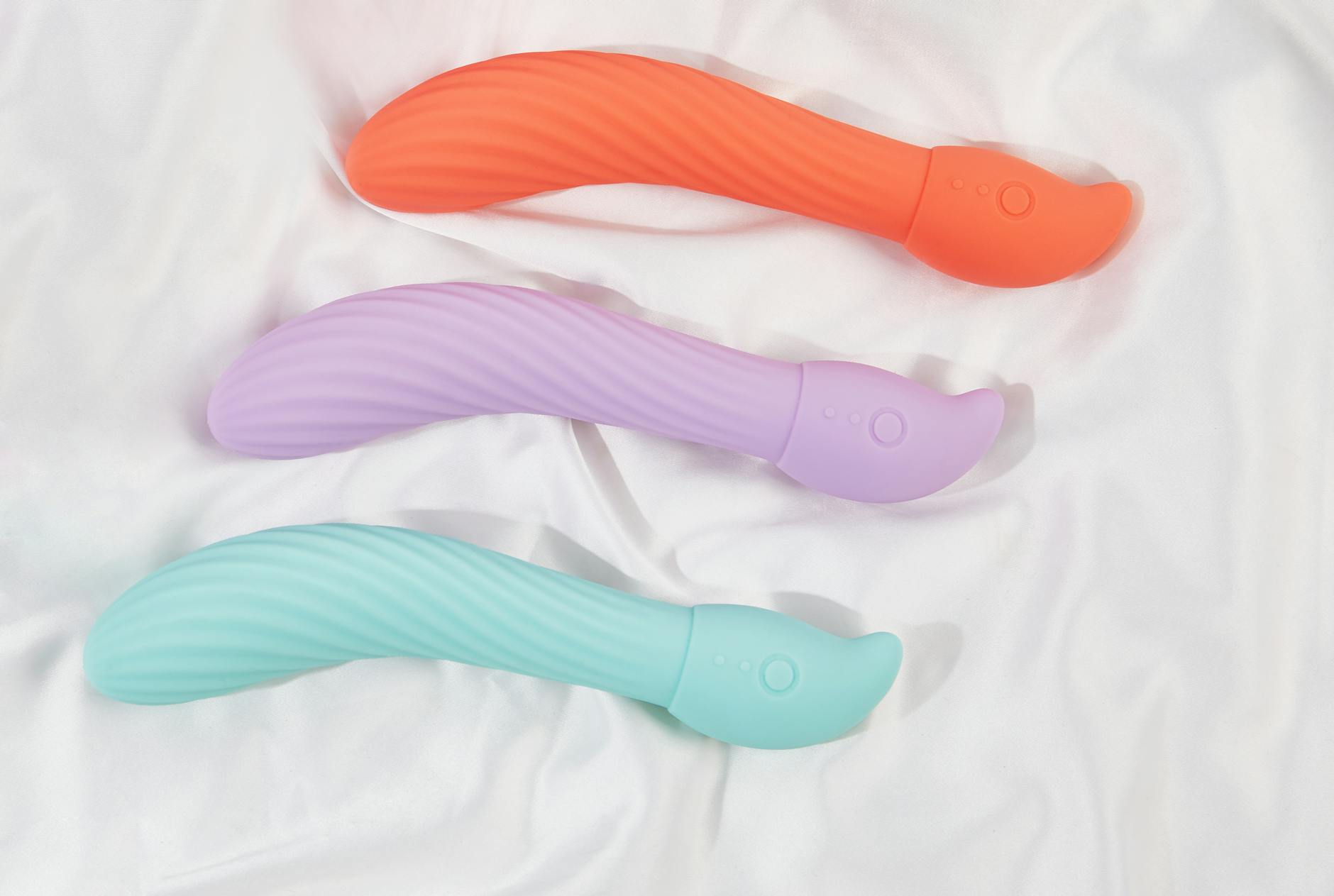
Lemon Vibrator for Couples: How to Incorporate Into Partnered Play
Here's the thing about introducing a lemon vibrator into partnered sex: it's not about the toy. It's about the conversation that happens before the toy ever shows up.
I work with couples constantly who are wildly attracted to each other but have never actually said out loud what they want. They've developed this unspoken choreography over years and calling it into question feels risky. Then someone floats the idea of a vibrator and suddenly all that nervousness bubbles up. What if they think I'm not enough? What if they've wanted this all along and never told me? What if it changes things?
It does change things. On purpose. And when you approach it as a couple rather than a secret experiment, those changes tend to be exactly what you both needed.
The conversation before the lemon toy appears
You don't buy a clitoral vibrator by accident. The intentionality matters. Most couples I work with find it easier to start with curiosity rather than pressure. Instead of "I want to use a vibrator," try "I've been thinking about whether we're missing something in our sex life."
That opens a dialogue instead of making a proposal. The other person gets to ask questions. Why are you thinking about it now? What would it look like? Would they be using it on you, or you on yourself while they're involved? Does it feel like they're not satisfying you, or is it just about adding sensation?
These questions sound awkward written out. In practice, they're relieving. You're naming something that's probably been sitting at the edge of both your minds anyway.
Most couples report that the conversation is actually hotter than they expected. Talking explicitly about sex activates the same neural circuits as sex itself. You're already halfway there before you even touch anything.
Why a lemon vibrator specifically works for couples
A lemon clitoral vibrator like the Lem is designed for precise, consistent stimulation. That matters when you're sharing it because it doesn't require constant adjustment or pressure from a partner. One of the fears I hear is "will they get bored holding it?" With a vibrator that does its job reliably, the answer is no. They get to focus on touch, kissing, closeness, whatever else is happening.
The other thing that matters: it's small and responsive. During penetrative sex, your partner can use it on you without it being awkward or creating weird angles. It fits between bodies. During manual sex or oral, they can hold it steady while also using their hands or mouth somewhere else. It's additive rather than replacing.
A lemon adult toy is also something you're choosing together, which makes it different from a vibrator that's already sitting in your nightstand for solo use. This is deliberately shared from the start.
Starting with positioning and presence
When you first use a lemon sexual toy together, don't assume it's going to happen during standard sex positions. Start with something simpler. Sit facing each other. They hold the vibrator. You guide their hand to show them what feels good, what rhythm you like, where the pressure wants to be.
This is information transfer. You're teaching them something specific about your body that they literally cannot know otherwise. Most partners find this clarifying rather than threatening. You're not asking them to read your mind. You're showing them directly.
Take your time here. This isn't a fast track to orgasm. This is learning. If you come, great. If you don't, that's information too. Keep the vibrator on a lower setting initially. Your clitoris has a lot of nerve endings and too much sensation too fast can actually be numbing rather than pleasurable.
Incorporating it into existing patterns
Once you've had that initial conversation and tried it in a low-pressure setting, you get to figure out where it fits into the sex you're already having.
For partnered penetrative sex, a clitoral vibrator changes the equation because now you can have consistent clitoral stimulation during penetration, which is how roughly 75 percent of people with vulvas orgasm. Some couples find that one partner uses the vibrator on the other. Some find it's easier if the receiving partner holds it themselves so they can control the pressure and angle. There's no right way. It's about what feels connected to both of you.
For oral sex or manual stimulation, the toy can enhance what's already happening. Your partner can use the vibrator on you while they're touching you somewhere else, or while you're touching them. It's not a replacement for their attention. It's an addition to it.
The key is to keep checking in. Does this feel good? Is the angle right? Do you want more pressure, less? Are they enjoying themselves? If someone's feeling disconnected, pause. That's the feedback loop working. You're allowed to stop and recalibrate.
What to do if it feels weird or disconnected
Some couples introduce a lemon vibrator and it feels amazing immediately. Others try it and feel like something's off.
That's completely normal. Pleasure is about context, connection, and comfort all at once. If you're using a clitoral vibrator and the moment feels clinical or like someone's checking a box, name that. Don't just push through hoping it gets better.
Common issues: one partner feels left out because the vibrator is getting more attention than they are. Solution: slower, more touch and presence. One partner is anxious about performance, so the vibrator feels like proof of that anxiety. Solution: pause, reassure, try again a different way or different day.
One partner's intensity is all wrong for the other. Solution: whoever's holding the toy (or using it on themselves) gets to direct the pressure. It's not fixed. You can ask for a different speed, a different pattern, a pause.
I work with couples who needed three tries, five tries, ten tries before a vibrator integrated smoothly into their sex life. The attempts themselves were the actual work. Every time you showed up and tried together, you were building communication and trust around pleasure.
The shift in intimacy that happens
Most couples I work with tell me that introducing a lemon vibrator together changed their sex life in ways they didn't expect. Not just because of the physical sensation, but because of what it required: explicit communication about pleasure, vulnerability, actual requests instead of guessing, and permission to want things.
That foundation shifts other parts of the relationship too. You're practicing saying difficult things and having someone receive them with openness instead of defensiveness. That's a skill that migrates everywhere.
Your partner learns that your pleasure is separate from their performance. Your pleasure is your responsibility and theirs to support, but not to deliver single-handedly. That's actually freeing for both people. It takes pressure off whoever's initiating, and it means whoever's receiving gets what they actually need.
There's also an element of play that tends to return. Sex over years can calcify into a routine. Adding something new, something you chose together, tends to wake things up. You're trying something, laughing at the awkwardness, figuring it out. That playfulness is what keeps long-term partnerships feeling alive.
Common questions couples have
Should we buy the vibrator together or is it okay to surprise them with it? Buying it together signals that this is intentional and collaborative. A surprise can feel good if you already know your partner's curious, but if you're still in early conversation, shopping together is usually better. You're making a choice as a team.
What if my partner feels threatened by the vibrator? This goes back to the conversation. If someone's worried the vibrator means they're not enough, they need reassurance that's specific and honest. "I want this because my body responds to this kind of stimulation, and I want you to be part of that" is more useful than "it's not about you."
How often should we use it? Whatever feels natural. Some couples use a lemon clitoral vibrator every time they have sex. Some use it occasionally. Some buy one, try it three times, and it becomes a sometimes thing. There's no quota. If it's bringing pleasure and connection, it's working.
What if neither of us orgasms when we use it? Orgasm isn't the only marker of good sex. If the experience feels connecting and pleasurable, that's the win. Sometimes introducing a new element actually relaxes performance pressure enough that orgasms come more easily later.
Is it normal for my partner to want to use it on themselves during partnered sex? Yes. Absolutely. Some people find it easier to reach orgasm with the vibrator on themselves while their partner focuses on other touch. That's not rejection. That's making sure everyone's getting what they need.
When to keep exploring, when to step back
If you introduce a lemon vibrator and it's adding pleasure and connection, keep going. Try different patterns, different speeds, different positions. Learn your partner's body more. Build on what's working.
If it's creating tension or if one person's doing it out of obligation, take a break. Sex should feel consensual and pleasurable for both people. If you're using a toy and someone's checked out, that's information. Pause, talk, figure out what's missing.
Some couples need guidance on how to communicate about pleasure, and that's completely normal. A couples therapist or sex educator can help you have these conversations more easily. There's no shame in that. Most long-term relationships would benefit from at least one conversation with someone trained in intimacy and communication.
The goal isn't to use a lemon adult toy perfectly. It's to keep building the kind of partnership where you can ask for what you need, receive your partner's needs without defensiveness, and keep exploring together. The vibrator is just the vehicle.
FAQ
Is it normal for one partner to want the vibrator more than the other?
Completely normal. People have different levels of interest in any given activity. If one partner's more enthusiastic, that's fine. They can use it when they want. The other partner doesn't have to perform enthusiasm they don't feel. What matters is that neither person is pressuring the other or using reluctance as punishment.
Can we use a lemon vibrator during long-distance sex?
Absolutely. Some long-distance couples use vibrators during video calls. It adds a layer of connection and presence even when you're physically apart. Communication and clear boundaries around what you're both comfortable with matters even more in long-distance contexts.
What if my partner says they don't want to use a vibrator?
That's their answer. You don't get to convince them out of it. If this is something you really want to explore, you can use it during solo sex. You can come back to the conversation later if something shifts. But pressuring someone into sex acts they're not interested in is the opposite of what builds intimacy.
How do we talk about vibrators without it feeling clinical or like we're reading a manual?
Lean into your natural language. If you'd normally say "I want more clitoral stimulation," say that. If you'd say "I've been thinking about trying something new," start there. The goal is honest conversation, not a specific script. It'll feel less clinical if you're just talking like you normally do.
Should we ask our partner if they want to use the vibrator on themselves or on us?
Yes. Don't assume. Some people love the control and sensation of using it themselves. Others like the sensation of their partner controlling it. Just ask. "Would you want to hold this, or would you rather I do?" Simple as that.
What if we try it and I feel disconnected from my partner afterward?
That's valuable feedback. Something about the experience shifted how you felt connected. Talk about it while you're still close, before you both move on to something else. Maybe it was the positioning, or you felt like they weren't present, or something about the dynamic felt off. Most of the time, naming it makes the next time better.
Moving forward
Bringing a lemon clitoral vibrator into partnered play isn't about fixing your sex life or proving you're adventurous. It's about staying curious about each other and building the kind of relationship where pleasure matters and asking for what you need is normal. If that sounds like work, it kind of is. But it's the good kind. The kind that makes everything else easier too.
If you want to talk through how to have these conversations or you're feeling stuck in the approach, reach out. That's what I'm here for.