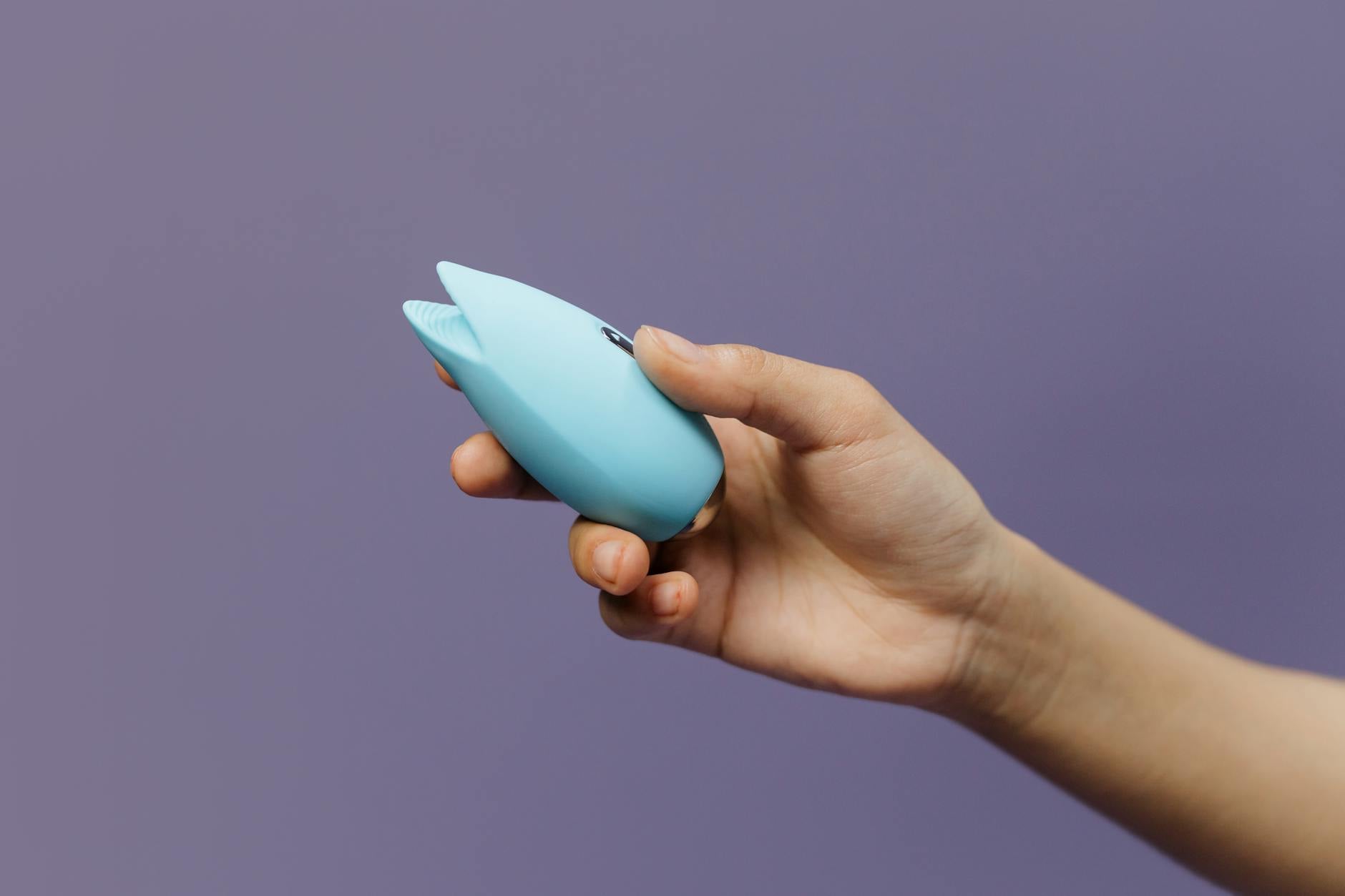
Let's be real about starting now
There's a particular kind of nervous energy that comes with trying a lemon vibrator for the first time when you're over 40. You're not worried you're doing it wrong. You're worried about doing it at all. That hesitation makes sense. By your 40s, you've spent decades absorbing messages about what your body should and shouldn't want. Starting something new, especially something pleasure-focused, can feel like you're breaking an invisible rule.
Here's the thing: you're not starting late. You're starting when you actually have permission to.
Most people over 40 who come to pleasure tools aren't beginners to sex. They're beginners to their own bodies. There's a massive difference. That experience is actually an advantage.
Why 40+ bodies respond differently to lemon vibrators
If you've had a decade or two of partnered sex, your nervous system has learned a specific rhythm. Your body expects certain patterns. A lemon clitoral vibrator breaks that pattern entirely. The suction sensation is completely different from pressure or vibration alone. For some people, that's instantly perfect. For others, it takes a few tries to understand what your body is actually feeling.
Over 40, tissue changes matter too. Vulval tissue becomes slightly less elastic, and that means the clitoral area can be more sensitive, not less. The lemon vibrator's gentle suction actually works beautifully with this. You're not fighting your biology. You're working with exactly what you have now.
Hormonal shifts affect sensation too. If you're perimenopausal or postmenopausal, your arousal might move slower than it did at 25. A lemon vibrator is patient. It works at your pace, not someone else's.
How to actually begin
The mental setup matters more than the device setup. Before you even unwrap anything, decide you're doing this for yourself. Not because a partner wants you to. Not because you feel like you should. Because you're curious.
When you're ready to actually use it, start in private and alone. No partner, no performance pressure. You need to learn what your body does before adding anyone else to the equation. Give yourself 20 minutes where you're not rushed and not worried about how long this takes.
Use water-based lubricant. I know I say this constantly, but it matters hugely for first-time users. The lemon vibrator's suction works better with moisture, your tissue appreciates the slip, and you'll have zero friction resistance to work around. Put the lube on your body first, not on the device.
Start with the lowest setting. The Lem has five intensities. Most people never need to go beyond three. Begin at one and spend a solid five minutes there. You're not trying to come right now. You're learning what the sensation feels like when it's gentle.
What you'll actually feel
Unlike a traditional vibrator that moves side to side, a lemon suction vibrator creates a sensation of gentle pulling. It's concentrated, steady, and it changes how your clitoris responds. Some people describe it as feeling like a soft kiss that pulses. Others say it's like a gentle drawing sensation. Neither description is wrong. Your first experience might be completely different from both.
You might feel a lot in the first 30 seconds, or nothing much for the first two minutes, then suddenly a shift. Both are normal. Your nervous system is learning a new input. That takes a moment.
The urge to increase intensity is real. Resist it for now. Intensity matters less than understanding what you actually like. Spend at least three sessions at the lower settings before you experiment with higher ones. This isn't about rushing to an orgasm. It's about mapping pleasure.
Building your own comfort baseline
After your first experience, you might feel satisfied, or unsure, or wildly aroused, or nothing much at all. None of those reactions mean something is wrong. It just means your body is processing new information.
Give yourself at least three sessions before deciding if the lemon vibrator is right for you. Many people need that time to recognize sensation. Your first time, you're fighting novelty. By the third time, your nervous system has settled and you can actually feel what's happening.
If you're genuinely uncomfortable, stop. Discomfort and unfamiliarity are different things. Discomfort is your signal to pause. Unfamiliarity is usually just newness.
When you do feel pleasure building, let it. Don't chase the orgasm. Orgasms are often harder to reach when you're actively trying for them, and they're almost automatic when you stop trying. You're over 40. You know your body. Trust that.
When to bring a partner into this
If you're partnered and thinking about eventually using your lemon clitoral vibrator together, don't rush that conversation. First, you need to feel confident and familiar with the device alone. That confidence is magnetic. Your partner will be more interested in something that clearly brings you pleasure than in something you're uncertain about.
When you do want to incorporate it into partnered play, start by showing them what you like. "This is what feels good to me" is so much clearer than any instruction. How to Use a Lemon Vibrator With Your Partner: A Communication Guide has the whole framework for that conversation.
Common hesitations and what actually helps
Hesitation: "Will it be weird or uncomfortable to use alone?"
Nope. Solo use is the whole point. You're not being selfish. You're being responsible. Knowing your own body and what brings you pleasure is foundational to every relationship, sexual or not.
Hesitation: "Is 40-something too old to be starting with this?"
Absolutely not. You're at an ideal age to start. You've had enough experience to understand your boundaries. You have enough autonomy to make decisions just for you. And your body has no memory of performance pressure if you're choosing pleasure for yourself for the first time.
Hesitation: "What if nothing happens?"
Then nothing happens that first time. You rest, you try again in a week, you give your nervous system time to catch up. Pleasure isn't automatic. It's learned. At 40, you're patient enough to let that learning happen without spiraling.
Practical rhythms that work
Try using your lemon vibrator two to three times per week if you can. That's enough frequency to learn your body without turning it into a project. If you only have time once weekly, that's fine too. Consistency matters more than frequency.
Budget 15 to 20 minutes when you do use it. That's not necessarily 20 minutes of device time. It's 20 minutes of permission. Permission to be alone, to focus, to not answer your phone, to not solve anyone else's problem. For many people over 40, that uninterrupted time is the biggest gift.
Keep your lemon vibrator somewhere private but accessible. A drawer, a bag, somewhere you don't have to explain it or hide it like it's contraband. Shame kills pleasure. Convenience supports it.
When arousal takes time to build
If you're over 40, arousal probably does take longer now than it did at 25. That's not a problem. That's information. Your body wants 15 to 25 minutes of warm-up time. Budget it. Your lemon vibrator can be part of that warm-up, not the entire experience.
Consider what gets your head in the right place. For some people, it's a few minutes of written erotica or audio. For others, it's just quiet time alone. You know what works for your brain. Do that first. Then introduce the device.
If you find yourself getting distracted by thoughts, stop fighting it. Your mind wandering doesn't mean the tool isn't working. It means you're still learning to be present in your own pleasure. That takes practice. You'll get there.
The real measure of success
Success isn't an orgasm. Success is a moment where you felt something good in your body and you stayed with it instead of dismissing it. That's the whole thing. That's the win. Everything else builds from there.
FAQ: What first-time users over 40 usually ask
How long does it take before a lemon vibrator feels natural?
Most people feel genuinely comfortable by session five or six. Your first three times are all about learning. By the fourth session, you're starting to anticipate what feels good. By session six, it's just part of your pleasure toolkit.
Is there anything that makes a lemon vibrator not work for someone?
A small percentage of people find suction sensation uncomfortable, the same way some people don't like certain textures. If after three genuine attempts you're still not enjoying it, that's okay. Your body doesn't owe the device anything. But most people who stick with it for three tries find something they like.
Should I be using lubricant every single time?
Yes. Always water-based. It makes the sensation better, it's easier on tissue, and it lets you focus on feeling instead of managing friction.
What's the deal with the different intensity levels?
Think of them as different volume settings. You don't put the music all the way up when you're first listening to a new song. Start low, understand the base sound, then experiment. Most people spend 80 percent of their time at settings one or two.
Can I use a lemon vibrator if I'm on antidepressants or blood pressure medication?
There's no mechanical contraindication. Some medications can lower sensation or orgasm difficulty. If you're noticing that already, a lemon vibrator might help because it provides more direct stimulation. If you have specific concerns, ask your doctor, but the device itself is safe with medication.
What if my partner finds my lemon vibrator?
Then you have a conversation. If you're partnered and worried about judgment, that's actually worth paying attention to. Your pleasure matters. If your partner can't respect that, that's information about the relationship, not about whether you should have a vibrator.
The real starting line
You're not too old. You're not starting late. You're starting at the exact moment when you have the clarity to know what you want and the courage to actually pursue it. That's not beginners luck. That's the advantage of being 40-something.